
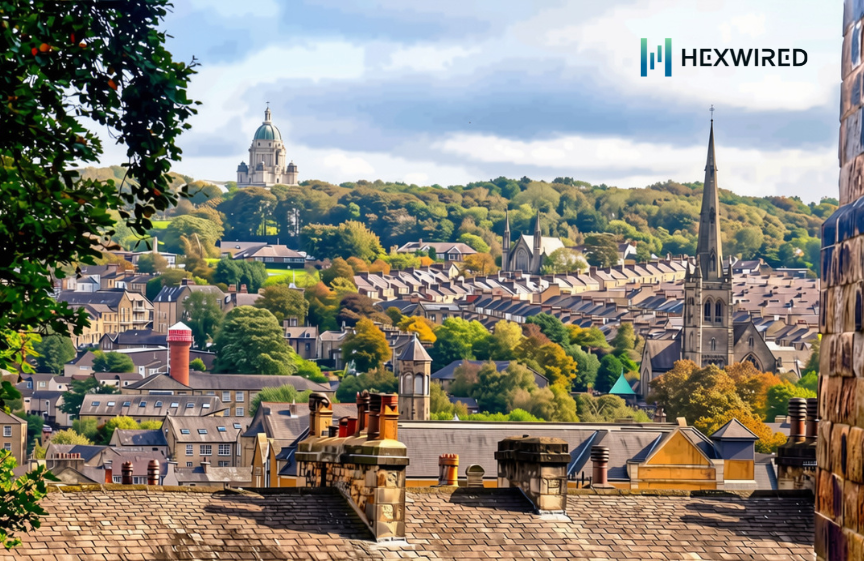
Lancaster is a historic city in Lancashire with a growing technology, engineering and research economy. While the city is well known for its university, castle and position close to the Lancashire coast and countryside, it also has a strong base in areas including cyber security, artificial intelligence, engineering, advanced manufacturing, environmental technology and digital innovation.
The city benefits from Lancaster University, a growing network of technology and innovation businesses, specialist research facilities and good rail connections to Manchester and other major cities in the North West.
From technology jobs and salaries to housing, commuting, education and quality of life, this guide covers what you need to know about working and living in Lancaster in 2026.
Overview
- The Tech and Engineering Sector in Lancaster
- The Tech Job Market in Lancaster
- Tech Job Salaries in Lancaster
- Technology, Digital and Innovation in Lancaster
- Tech Cost of Living in Lancaster
- Housing in Lancaster
- Buying Property in Lancaster
- Commuting and Public Transport in and Around Lancaster
- Education and Skills in Lancaster
- Life Outside of Work in Lancaster
- Why Lancaster Works for Tech Professionals
- Using Technology Recruitment Agencies for Tech Jobs in Lancaster
The Tech and Engineering Sector in Lancaster
Lancaster has a diverse economy, with technology and engineering sitting alongside established strengths in education, healthcare, environmental science, manufacturing and professional services.
Lancaster University plays a particularly important role in the city’s technology and engineering ecosystem. The university works with businesses across areas including artificial intelligence, cyber security, advanced manufacturing, renewable energy, materials science and quantum technologies.
This gives Lancaster an interesting position within the North West technology market. It is not simply a university city. The combination of research, engineering, digital technology and commercial innovation creates opportunities for a wide range of technical professionals.
A strong science and technology base
Lancaster University is one of the biggest drivers of the city’s technology economy.
The university works with businesses on research, product development, innovation and access to specialist facilities. It reports more than 15,000 business and innovation partnerships and says its work contributes approximately £2 billion to the UK economy each year.
The university’s research and teaching strengths cover areas including computing, engineering, physics, AI, cyber security, data science, advanced manufacturing and environmental technology.
For technology professionals, this creates opportunities to work in an environment where research and commercial technology are closely connected.
Engineering and advanced technology
Engineering is another important part of Lancaster’s technology economy.
Lancaster University has expertise across engineering and physical sciences, while local business locations such as White Lund Estate provide space for manufacturing, engineering and industrial businesses.
The university is also developing specialist facilities and research around areas such as nuclear engineering, advanced manufacturing, materials and energy.
This creates potential opportunities across:
- Electronics engineering
- Systems engineering
- Mechanical engineering
- Software engineering
- Advanced manufacturing
- Energy and nuclear
- Materials science
- Automation
Cyber security
Cyber security is one of Lancaster’s strongest technology areas.
Lancaster University has recognised expertise in cyber security research and education, including its status as an Academic Centre of Excellence in Cyber Security Research. The university is also developing its Data Cyber Quarter, bringing together researchers, industry, government and emerging technology businesses.
The university’s Cyber Security degree includes areas such as penetration testing, cryptography, network security, secure AI, digital systems and cyber-physical systems.
Potential career paths include:
- Cyber Security Engineer
- Security Analyst
- Information Security Specialist
- Security Consultant
- Cyber Security Architect
- Cyber Security Researcher
Artificial intelligence and data
AI is another growing area within Lancaster’s technology ecosystem.
Lancaster University’s AI research covers areas including machine learning, computer vision, autonomous systems, digital health, remote sensing and trustworthy AI.
The university also has a dedicated Data Science and AI Institute, while its computing courses increasingly cover AI and machine learning.
This creates opportunities for professionals working across:
- Artificial intelligence
- Machine learning
- Data science
- Software development
- Computer vision
- Autonomous systems
- Cyber security
The Tech Job Market in Lancaster
Lancaster’s technology job market is closely connected to its university, research community and wider Lancashire and North West economy.
While software development is an important part of the market, opportunities also exist across engineering, cyber security, data, AI, science, manufacturing and technical services.
The city can also provide a useful base for professionals who want access to the wider North West employment market without living in Manchester.
Software and digital technology
Software development remains an important part of Lancaster’s technology sector.
Employers require software developers and engineers across areas including application development, software engineering, data, cloud technology and specialist research.
Lancaster University itself has a significant technology workforce supporting teaching, research and university services.
Its computing provision includes software development, programming, systems design, testing, AI and cyber security.
Cyber security
Cyber security is a particularly interesting area for Lancaster.
The city benefits from university research, specialist education and links with businesses working in the wider North West cyber sector.
Lancaster University has also highlighted the wider North West as having the UK’s largest cluster of cyber security companies outside London and the South East.
This means professionals do not necessarily need to limit their job search to companies based directly within Lancaster.
Engineering and manufacturing
Lancaster and the surrounding Lancashire area have a long-established engineering and manufacturing base.
White Lund Estate, located between Lancaster and Morecambe, is the district’s principal industrial estate and includes advanced factories, industrial units and warehouse space.
The wider area provides opportunities across engineering, manufacturing, energy, electronics and industrial technology.
AI and emerging technology
AI is becoming increasingly relevant to Lancaster’s technology market.
The university is active in AI research, while businesses and spin-outs are developing technologies in areas including AI security, data science and advanced technology.
In September 2026, Lancaster University reported that a Lancaster AI spin-out had raised US$30 million in Series A funding as demand increased around AI cyber security.
Tech Job Salaries in Lancaster
Technology salaries in Lancaster vary depending on the role, level of experience and specialist skills.
Unlike larger technology hubs such as Manchester, salary data specifically for Lancaster can be more limited. Professionals should therefore also consider opportunities across Lancashire and the wider North West when comparing salaries.
Specialist skills can have a significant influence on earning potential, particularly in areas such as:
- C and C++
- Embedded software
- Electronics
- Cyber security
- Artificial intelligence
- Machine learning
- Data science
- Systems engineering
- Software engineering
- Technical leadership
Senior technology roles
Experienced technology professionals can command higher salaries, particularly where they have specialist technical knowledge.
Professionals with experience in areas such as embedded software, cyber security, AI, electronics and systems engineering may find opportunities across Lancaster as well as the wider North West.
Mid-level roles
Mid-level developers, engineers and technology specialists form an important part of the local employment market.
Lancaster can be attractive for professionals who want to work in a research-led technology environment while also having access to larger employment centres such as Manchester.
Graduate and entry-level technology jobs
Lancaster has a strong graduate talent pipeline thanks to Lancaster University.
The university’s Computer Science and Cyber Security courses cover programming, software engineering, digital systems, AI and security, giving graduates a range of potential routes into technology careers.
Technology, Digital and Innovation in Lancaster
Innovation is becoming increasingly important to Lancaster’s economy.
Lancaster University works closely with businesses and research organisations to commercialise new technologies, develop products and support business growth.
Lancaster’s innovation ecosystem
The university provides access to research expertise, specialist facilities, co-working space and student talent.
Lancaster City Council also identifies the Lancaster Environment Centre as a location where businesses can work alongside environmental researchers and innovators, while Fraser House Hub provides space aimed at the digital and technology economy.
Supporting new technology businesses
Lancaster University has continued to support spin-outs and technology businesses emerging from its research.
In 2026, five Lancaster University spin-out companies were selected to exhibit at the UK Global R&D and Science Investment Summit, highlighting the strength of the university’s research commercialisation activity.
Research and specialist technology
Lancaster’s research strengths cover a wide range of emerging technologies.
These include:
- Artificial intelligence
- Cyber security
- Quantum technology
- Advanced manufacturing
- Materials science
- Renewable energy
- Environmental technology
- Engineering
The combination of university research and commercial partnerships gives Lancaster a strong foundation for future technology growth.
Tech Cost of Living in Lancaster
One of Lancaster’s advantages for technology professionals is its relatively affordable housing compared with many larger UK cities.
The latest ONS figures show that the average house price in Lancaster was approximately £203,000 in July 2026, while the average private rent was £823 per month in August 2026.
Housing costs
Lancaster’s average house price of £203,000 was up 4.9% compared with July 2025.
Average private rents increased by 6.3% over the same period, from £774 to £823 per month.
This remains below the average house price and rent across the North West, although the gap varies depending on the type and location of property.
Rental costs
Average monthly rents in Lancaster in August 2026 were approximately:
- One bedroom: £602
- Two bedrooms: £753
- Three bedrooms: £925
- Four or more bedrooms: £1,226
The average rent for flats and maisonettes was approximately £698 per month.
For professionals relocating to Lancaster, these costs can make the city an interesting alternative to larger and more expensive technology centres.
Housing in Lancaster
Lancaster offers a mixture of city-centre apartments, traditional terraced properties, suburban housing and larger homes in surrounding communities.
City centre living
Living close to Lancaster city centre provides easy access to:
- Restaurants and cafés
- Shops
- Lancaster Castle
- Cultural attractions
- Lancaster railway station
- The university
- Bars and entertainment
The city centre is relatively compact, making walking and cycling practical for many local journeys.
Residential areas
Professionals looking for more space can consider residential areas outside the city centre.
There are also housing options across the wider Lancaster district, including Morecambe and surrounding towns and villages.
For people working in technology, the wider area can provide a choice between living closer to the city centre or finding more space further out.
Business and regeneration
Lancaster City Council is continuing to focus on economic growth, regeneration, infrastructure and skills.
Its 2026 priorities include creating an inclusive and prosperous local economy, supporting business growth and delivering major regeneration projects.
Buying Property in Lancaster
Lancaster remains considerably more affordable than many UK cities.
According to the ONS, the average house price was £203,000 in July 2026, compared with £193,000 a year earlier.
Lancaster property prices
Average property prices in July 2026 were approximately:
- Detached properties: £348,000
- Semi-detached properties: £226,000
- Terraced properties: £182,000
- Flats and maisonettes: £116,000
First-time buyers
The average price paid by first-time buyers in Lancaster was approximately £181,000 in July 2026.
This makes Lancaster an interesting option for professionals looking to buy their first home while working in technology or engineering.
Why people choose Lancaster
Lancaster combines relatively affordable housing with access to a major university, research opportunities, countryside, the coast and the wider North West.
For technology professionals, the ability to work locally while also accessing Manchester and other cities by rail adds to its appeal.
Commuting and Public Transport in and Around Lancaster
Lancaster’s railway station provides an important connection to the wider North West and beyond.
The city sits on the West Coast Main Line, giving residents access to cities including Manchester, Preston, Glasgow and London.
Rail connections
Lancaster to Manchester can be reached in around 56 minutes on the fastest listed services.
This makes commuting to Manchester possible for professionals who prefer to live in Lancaster.
Lancaster also has direct rail connections towards destinations including Preston, Blackpool, Glasgow and London, although journey times and direct services vary depending on the timetable.
Local transport
Lancaster’s relatively compact centre makes walking and cycling realistic options for many local journeys.
The university campus is outside the city centre, while local bus services connect the city with the university and surrounding communities.
For professionals working across the wider region, Lancaster’s location also provides access to the M6 motorway.
Education and Skills in Lancaster
Education is one of Lancaster’s biggest strengths and plays an important role in the city’s technology economy.
Lancaster University
Lancaster University is a major source of graduate talent and research expertise.
Its technology-related teaching and research covers:
- Computer science
- Software engineering
- Cyber security
- Artificial intelligence
- Data science
- Engineering
- Physics
- Quantum technologies
- Environmental technology
The university also has strong links with industry, supporting placements, research partnerships and technology development.
Computing and cyber security
Lancaster University’s Computer Science degree includes programming, software development, AI, cyber security and embedded systems.
Its Cyber Security degree covers areas including network security, penetration testing, cryptography, secure AI and cyber-physical systems.
Skills for Lancaster’s technology economy
The city’s universities and research organisations provide a talent pipeline across:
- Computer science
- Software engineering
- Cyber security
- Artificial intelligence
- Data science
- Engineering
- Physics
- Environmental science
- Digital technology
- Research
This gives local businesses access to graduates with relevant technical skills.
Life Outside of Work in Lancaster
Lancaster offers a good balance between city life and access to the countryside.
The city has a strong student population, historic architecture, independent businesses and cultural attractions.
Culture and heritage
Lancaster Castle, Lancaster Cathedral and the city’s historic streets are some of its best-known attractions.
The city also has museums, galleries and cultural venues, giving residents plenty to explore outside working hours.
Restaurants and entertainment
Lancaster has a good selection of independent restaurants, cafés, pubs and entertainment venues.
The university population also contributes to a lively atmosphere, particularly around the city centre.
Green spaces and the outdoors
One of Lancaster’s biggest advantages is its location.
The city is close to the Forest of Bowland and within easy reach of the Lancashire coast and Morecambe Bay.
This gives residents plenty of options for walking, cycling and exploring the surrounding countryside.
Events
Lancaster hosts events throughout the year covering culture, music, food, heritage and the arts.
The city’s location also makes it a useful base for exploring other parts of Lancashire and the wider North West.
Why Lancaster Works for Tech Professionals
Lancaster offers an interesting balance for people working in technology and engineering.
It has a genuine technology and research ecosystem, driven largely by Lancaster University and its links with industry. Its strengths include cyber security, artificial intelligence, engineering, advanced manufacturing, environmental technology and digital innovation.
At the same time, Lancaster offers relatively affordable housing compared with many larger UK cities. The latest ONS figures put the average house price at £203,000, while average private rent was £823 per month.
The city’s rail connections also make it possible to access larger employment markets. Manchester, for example, is around 56 minutes away on the fastest listed train services.
For technology professionals who want access to research, specialist technology sectors, a strong university and the wider North West job market without the costs of a much larger city, Lancaster is worth considering.
Using Technology Recruitment Agencies for Tech Jobs in Lancaster
Finding the right technology role isn’t always about searching for jobs with a particular job title.
Specialist technology recruitment agencies can help candidates identify opportunities that match their technical skills, experience and career goals. This can be particularly useful for professionals working in specialist areas such as software engineering, C++, embedded systems, electronics, cyber security, AI, data and systems engineering.
For employers, specialist recruitment agencies can provide access to candidates with technical skills that can be difficult to find through general recruitment channels.
About Hexwired Technology Recruitment
Hexwired recruitment is a top tech recruitment agency, providing tailored and cost-effective services for our clients, helping employers to hire skilled professionals in software engineering who are suited to the business needs quickly. Our technical consultants’ knowledge and understanding of the sector, alongside their experience in the tech industry, are one of the reasons we excel at finding you the right candidates in software.
We provide both contract and permanent solutions to the technology sector, covering areas such as Embedded Software, Electronics (FPGA, Digital Design, RF, IC Design), Software Test, Mechanical Design, C++ software engineer, Python, Golang, Machine Learning and Data Science, Technical Sales and Project management, and more. Need help hiring permanent/contract talent or looking for a new job? Contact us today.


